Cooling a Mining Rig: Air, Oil Immersion and Liquid Cooling Compared
Cooling is one of the most important parts of operating a cryptocurrency mining rig. Mining hardware converts a large amount of electrical energy into heat, and that heat must be removed continuously to protect components, maintain stable performance and keep the workspace manageable.
There is no universal best cooling method. Air cooling is usually the simplest and most accessible option, while oil immersion and liquid cooling can offer better heat control in demanding installations. The right choice depends on hardware type, electricity costs, ambient conditions, noise tolerance, maintenance skills and the scale of the mining operation.
Why Mining Hardware Needs Effective Cooling
Application-specific integrated circuits (ASICs), graphics processing units (GPUs), memory modules and voltage-regulation components all produce heat during operation. As temperature rises, hardware may reduce its clock speed, become unstable or shut down to prevent damage. Persistent heat can also accelerate the ageing of fans, thermal interfaces, capacitors and other components.
Cooling does not eliminate the heat produced by mining. It transfers that heat away from the chips and eventually releases it into the surrounding environment, a building, a heat-recovery system or an external cooling loop. This means that room ventilation and heat disposal remain important even when a rig uses immersion or liquid cooling.
Quick Comparison of Mining Cooling Methods
| Cooling method | How it removes heat | Main advantages | Main limitations | Best suited to |
|---|---|---|---|---|
| Air cooling | Fans move air across heatsinks and out of the mining area | Low complexity, widely available parts, easy inspection and repair | Noise, dust, airflow requirements and dependence on room temperature | Home miners, small farms and standard GPU or ASIC installations |
| Oil immersion | Non-conductive fluid absorbs heat directly from immersed components | Lower acoustic output, reduced dust exposure and effective heat transfer | Higher setup complexity, fluid handling and hardware compatibility concerns | Noise-sensitive sites and purpose-built mining installations |
| Liquid cooling | A coolant circulates through cold plates, blocks or other heat exchangers | Precise heat removal and strong control for high-density systems | Pumps, seals, radiators and coolant maintenance add failure points | High-performance systems and professional facilities |
Air Cooling: The Practical Starting Point
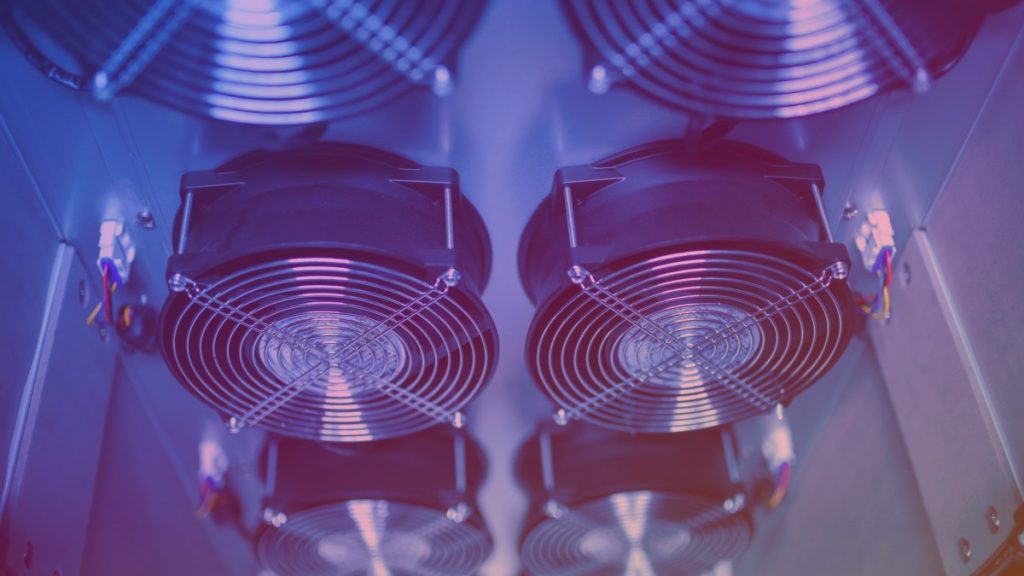
Air cooling is the standard approach for many mining rigs. Fans pull relatively cool air through heatsinks or across components, while warm air is directed away from the equipment. GPU mining rigs typically use the fans and heatsinks supplied with the graphics cards, whereas ASIC miners often rely on high-speed integrated fans.
Advantages of air cooling
The main benefit is simplicity. Air-cooled systems are easy to assemble, inspect and repair, and replacement fans are generally easier to source than immersion tanks, pumps or specialised cold plates. Air cooling also allows miners to use conventional hardware without modifying it for a liquid environment.
For a small or medium-sized installation, good airflow management can be sufficient. Keep intake and exhaust paths separate, avoid placing equipment too close together and remove dust regularly. Where possible, position the rig so that hot exhaust air does not return directly to the intake.
Limitations of air cooling
Fans create significant noise, especially when mining hardware operates under sustained load. Air-cooled systems also draw dust through their heatsinks, and clogged filters or dirty fins reduce cooling performance. In hot or humid climates, the local environment can make temperature management more difficult.
Air cooling also transfers heat into the room. A ventilation system, air-conditioning system or suitable exhaust arrangement may therefore be necessary. Air conditioning can improve temperatures, but its electricity consumption should be included when assessing overall mining economics.
Oil Immersion Cooling
Oil immersion places compatible mining hardware inside a bath of electrically non-conductive fluid. The fluid absorbs heat from the components, and that heat is then removed through natural circulation or a pumped system connected to a heat exchanger.
Immersion cooling can substantially reduce fan noise because the original fans may be removed or operated at a lower level, depending on the hardware and system design. The enclosed environment can also limit exposure to airborne dust and help maintain more consistent component temperatures.
Important considerations for immersion systems
Not every fluid is suitable for mining hardware. Immersion systems require a fluid specifically designed for electrical insulation and heat transfer; ordinary motor oil or other improvised liquids can create compatibility, contamination and fire-safety problems. Materials used in cables, plastics, seals and thermal pads should also be checked for long-term compatibility.
Maintenance is different rather than eliminated. Operators may need to monitor fluid condition, inspect pumps and heat exchangers, clean tanks and handle heavy equipment during servicing. Some components, including certain storage devices, power supplies or motherboard materials, may require special treatment or may not be suitable for immersion.
Immersion can be attractive where noise control and high-density deployment are priorities. However, the tank, fluid, plumbing and heat-rejection equipment add upfront cost and operational complexity, so the benefits should be compared with the value of the hardware being cooled.
Liquid Cooling
Liquid cooling uses a coolant circuit to carry heat away from selected components. A cold plate or water block is mounted against a chip or other heat-producing part, and a pump circulates coolant through the system before the warmed liquid reaches a radiator or external heat exchanger.
This method can provide highly controlled cooling and is useful for dense deployments or specialised hardware. It may allow a facility to concentrate more computing equipment in a smaller area than a conventional air-cooled layout, provided the electrical, plumbing and heat-rejection infrastructure is designed accordingly.
Risks and maintenance requirements
Liquid cooling introduces pumps, tubing, fittings, seals and radiators. Any of these parts can fail, and a leak near electronic equipment can cause severe damage. Coolant selection is also important because corrosion, biological growth or deposits can reduce performance and damage the loop.
Operators should inspect connections, monitor flow and temperature, and follow the cooling-system manufacturer’s maintenance schedule. Redundant pumps, leak detection and automatic shutdown controls can improve resilience, particularly in larger mining facilities.
How to Choose the Right Cooling Method
Start with the mining environment rather than the cooling technology. A well-ventilated workshop with a modest number of machines may be best served by air cooling, while a residential setting may place a higher value on reducing acoustic output. A larger operation should consider serviceability, heat rejection, energy use and the availability of trained maintenance personnel.
- Choose air cooling when low complexity, easy repairs and conventional hardware are the main priorities.
- Consider oil immersion when noise, dust and high-density deployment are major concerns and the operator can manage fluid-based maintenance.
- Consider liquid cooling when precise thermal control is needed and the site can support pumps, heat exchangers, monitoring and leak protection.
Cooling equipment also consumes energy. Fans, pumps, radiators, ventilation and air conditioning all affect the rig’s total power demand and operating cost. A cooling upgrade should therefore be evaluated as part of the complete system rather than by comparing hardware temperature alone.
Practical Cooling and Safety Checklist
Keep intake and exhaust routes clear, inspect fans and filters, and monitor temperatures over time rather than relying on a single reading. Sudden changes can indicate dust buildup, fan failure, a blocked radiator, pump problems or a change in room conditions.
Electrical safety is equally important. Use correctly rated circuits, avoid overloaded extensions and keep power cables organised. For immersion and liquid systems, follow the fluid supplier’s safety documentation, provide spill-control measures and ensure that fire protection is appropriate for the installation.
Finally, consider heat recovery where practical. Mining heat may be useful for space heating, water preheating or agricultural applications, but any recovery system must be designed safely and should not compromise equipment cooling.
Conclusion
Air cooling remains the most accessible solution for many mining rigs because it is straightforward, repairable and compatible with standard hardware. Oil immersion can reduce noise and dust while supporting dense deployments, but it requires suitable fluids, compatible components and a more specialised maintenance routine.
Liquid cooling offers precise heat management for demanding systems, yet pumps, seals and coolant loops create additional failure points. The best choice is the method that removes heat reliably, fits the site’s infrastructure and delivers acceptable total operating costs. Cooling performance, electrical consumption, maintenance and safety should all be considered before changing a mining setup.
Frequently Asked Questions
Is air cooling enough for a mining rig?
Air cooling is often sufficient when the rig has clear airflow, clean heatsinks and a suitable room temperature. It becomes less effective when equipment is densely packed, exhaust air recirculates or the room cannot remove the heat produced by the miners.
Does immersion cooling eliminate mining noise?
Immersion cooling can greatly reduce noise from component fans, but it does not necessarily make a system silent. Pumps, heat exchangers, external fans and other facility equipment may still produce sound.
Can any oil be used for mining immersion cooling?
No. The fluid must be electrically non-conductive and designed or verified for immersion-cooling use. Compatibility with plastics, seals, cables, thermal materials and other hardware components should be confirmed before deployment.
Which cooling method is most efficient?
Efficiency depends on the complete installation, including fans or pumps, ventilation, heat exchangers and ambient conditions. Immersion and liquid systems can transfer heat effectively, but their added equipment consumes energy and increases complexity, so the most efficient option varies by site.