CPU Mining in 2026: Which Processors Are Still Worth It?
CPU mining remains relevant for algorithms designed to favor general-purpose processors, especially RandomX for Monero, VerusHash, and XelisHash. However, the economics are much less attractive than they were during earlier mining cycles. For most people, CPU mining is unlikely to be profitable after electricity, hardware, cooling, and operating costs unless power is very cheap or free.
The processors below represent a mix of high-end AMD desktop CPUs, efficient Intel desktop chips, and newer 2026 models. Their performance varies substantially by algorithm, so choosing a processor should depend on the coin and mining software you plan to use rather than on core count alone.
What Makes a CPU Suitable for Mining?
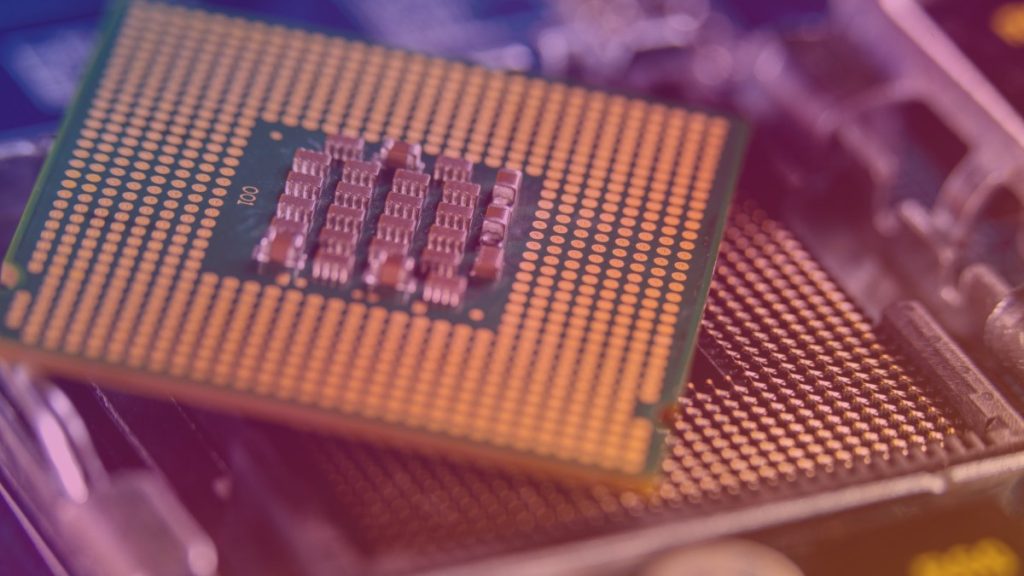
RandomX benefits from strong per-core performance, multiple threads, and substantial cache capacity. This is why high-end AMD Ryzen processors, particularly models with 3D V-Cache, can produce much higher RandomX hashrates than many CPUs with similar or even greater nominal core counts.
VerusHash and XelisHash can produce a different ranking. Memory behavior, architecture, thread efficiency, and algorithm implementation all influence the result. The figures in this comparison include XelisHash v2 and v3, as well as Flex and SpectreX, to show how each processor behaves across several CPU-friendly workloads.
Mining power is more useful than TDP when estimating operating costs. TDP describes a processor’s thermal design target, while mining power represents the listed power draw during mining for this comparison. The rest of the system will also consume electricity, including the motherboard, memory, storage, cooling, and power supply.
2026 CPU Mining Performance Comparison
| CPU | Release year | Cores / threads | TDP | Mining power | RandomX | VerusHash | XelisHash v2 | XelisHash v3 | Flex | SpectreX |
|---|---|---|---|---|---|---|---|---|---|---|
| AMD Ryzen 9 9950X3D2 | 2026 | 16 / 32 | 200 W | 170 W | 12.8000 | 49.4000 | 26.0000 | 16.5000 | 3.7800 | 32.0000 |
| AMD Ryzen 7 9850X3D | 2026 | 8 / 16 | 120 W | 85 W | 5.9500 | 22.4000 | 11.8000 | 7.5000 | 1.7100 | 14.5000 |
| Intel Core Ultra 9 299V | 2026 | 8 / 8 | 17 W | 30 W | 2.1000 | 9.2000 | 4.9000 | 3.1000 | 0.7100 | 6.0000 |
| Intel Core Ultra 7 268V | 2026 | 8 / 8 | 17 W | 28 W | 1.9000 | 8.5000 | 4.5000 | 2.8000 | 0.6500 | 5.5000 |
| Intel Core Ultra 5 236V | 2026 | 6 / 6 | 17 W | 25 W | 1.4000 | 6.2000 | 3.3000 | 2.1000 | 0.4700 | 4.0000 |
| AMD Ryzen 9 9950X3D | 2025 | 16 / 32 | 170 W | 125 W | 11.0000 | 42.8000 | 22.5000 | 14.3000 | 3.3000 | 28.0000 |
| AMD Ryzen 9 9900X3D | 2025 | 12 / 24 | 120 W | 105 W | 9.0000 | 34.0000 | 17.8000 | 11.3000 | 2.6000 | 22.0000 |
| Intel Core Ultra 9 285 | 2025 | 24 / 24 | 65 W | 80 W | 4.8000 | 21.6000 | 11.3000 | 7.2000 | 1.6500 | 14.0000 |
| Intel Core Ultra 9 285T | 2025 | 24 / 24 | 35 W | 50 W | 4.4000 | 20.0000 | 10.5000 | 6.7000 | 1.5400 | 13.0000 |
| Intel Core Ultra 7 265 | 2025 | 20 / 20 | 65 W | 75 W | 3.9000 | 17.7000 | 9.3000 | 5.9000 | 1.3600 | 11.5000 |
Which CPUs Stand Out?
AMD Ryzen 9 9950X3D2
The Ryzen 9 9950X3D2 is the performance leader in this data set. Its 16 cores and 32 threads, Granite Ridge architecture with Zen 5 Dual 3D V-Cache, and 170 W mining power produce the highest listed results: 12.8000 on RandomX, 49.4000 on VerusHash, 26.0000 on XelisHash v2, and 16.5000 on XelisHash v3.
It is the clearest choice for a user who wants maximum CPU hashrate and already has very low-cost electricity. Nevertheless, its high power draw and likely premium platform cost make it difficult to justify as a dedicated mining purchase under ordinary residential electricity rates.
AMD Ryzen 7 9850X3D
The Ryzen 7 9850X3D offers 8 cores and 16 threads with 85 W of mining power. It records 5.9500 on RandomX, 22.4000 on VerusHash, 11.8000 on XelisHash v2, and 7.5000 on XelisHash v3.
This processor may suit miners who also want a capable everyday or gaming system. Its lower mining power than the Ryzen 9 models can make system planning easier, but profitability still depends on the purchase price, electricity rate, coin price, network difficulty, and uptime.
AMD Ryzen 9 9950X3D and 9900X3D
The 2025 Ryzen 9 9950X3D reaches 11.0000 on RandomX, 42.8000 on VerusHash, 22.5000 on XelisHash v2, and 14.3000 on XelisHash v3 while using 125 W of mining power. The Ryzen 9 9900X3D provides 9.0000 on RandomX, 34.0000 on VerusHash, 17.8000 on XelisHash v2, and 11.3000 on XelisHash v3 at 105 W.
These two chips remain interesting when available at a lower hardware price than newer models. A discounted processor can have a better overall payback profile than a faster CPU purchased at a substantial premium.
Intel Core Ultra processors
Intel’s listed CPUs generally deliver lower absolute hashrates than the high-end AMD models, but several are designed around lower power levels. The Core Ultra 9 299V records 2.1000 on RandomX and 9.2000 on VerusHash at 30 W of mining power, while the Core Ultra 7 268V records 1.9000 and 8.5000 respectively at 28 W.
The Core Ultra 5 236V is the smallest listed processor, with 6 cores and 6 threads, 25 W of mining power, 1.4000 RandomX, and 6.2000 VerusHash. These chips may be more practical for quiet, compact, or already-owned systems than for building a dedicated mining rig.
The desktop Core Ultra 9 285 and 285T deliver higher hashrates than the low-power 2026 mobile-oriented entries. The Core Ultra 9 285 reaches 4.8000 RandomX and 21.6000 VerusHash at 80 W, while the 285T reaches 4.4000 and 20.0000 at 50 W. The Core Ultra 7 265 records 3.9000 RandomX and 17.7000 VerusHash at 75 W.
Why Profitability Is Difficult
CPU mining revenue changes continuously with coin prices, block rewards, network hashrate, mining difficulty, pool fees, and exchange conditions. Electricity is usually the most important controllable cost. Even a processor with strong hashrate can lose money when it runs around the clock at an expensive residential rate.
Profitability calculators can provide an estimate, but they should be treated as snapshots rather than guarantees. Enter the actual mining power, your electricity tariff, pool fee, and realistic uptime. Also account for the complete system draw instead of assuming that processor power is the same as wall power.
For many users, CPU mining makes more sense as a way to use an existing computer, learn about mining, or accumulate a preferred coin than as a standalone investment. Buying a new system solely for mining requires careful attention to hardware cost and the time needed to recover that cost.
Practical CPU Mining Advice
- Compare several algorithms instead of assuming RandomX will always be the best option.
- Monitor temperatures, clock speeds, and actual wall power during sustained workloads.
- Use conservative power limits when the reduction in hashrate is small compared with the reduction in electricity use.
- Check pool fees, payout rules, minimum payouts, and the availability of the mined coin.
- Recalculate regularly because profitability can change when difficulty or coin prices move.
Conclusion
The AMD Ryzen 9 9950X3D2 is the strongest CPU in this comparison for absolute performance across RandomX, VerusHash, and the listed XelisHash versions. The Ryzen 7 9850X3D and the 2025 Ryzen 9 models are also compelling for users who want high CPU hashrate, especially when hardware is used for more than mining.
Intel’s Core Ultra processors are more focused on lower-power operation and can be sensible for existing compact systems. However, most CPU miners should not expect reliable profits at normal electricity prices. The best opportunity generally comes from very cheap or free power, an already-owned computer, efficient tuning, and disciplined use of profitability calculations.
Frequently Asked Questions
Is CPU mining still profitable in 2026?
It can be profitable in specific circumstances, but most people should not assume that it will be. Low electricity costs, free surplus power, efficient hardware, favorable coin prices, and low network difficulty are usually necessary for attractive results.
Which algorithm should I mine with these CPUs?
RandomX is closely associated with Monero, while VerusHash and XelisHash are other CPU-friendly options. The best choice depends on current network conditions and your complete operating cost, so compare the algorithms using current calculator data rather than relying only on processor benchmarks.
Is TDP the same as mining power?
No. TDP is a thermal design specification, while mining power is the listed processor power draw under the mining workload. Actual electricity use at the wall will also include the rest of the computer and power-supply losses.
Should I buy a new CPU only for mining?
Usually, this is difficult to justify unless electricity is exceptionally cheap and the hardware has a reasonable purchase price. Using an existing computer can reduce financial risk, but it still requires monitoring heat, noise, uptime, and total electricity consumption.